By Muzaffar, founder of PilavTour · Updated: November 2026
The tomb of Imam al-Bukhari is in the village of Khartang, around 25 km north of Samarkand, about 30 minutes by car from the historic centre. The new memorial complex around it opened in March 2026 and is open every day, including for Friday prayer.
This guide covers what you need to decide before you go: how to get there, what you will find at the complex now, where to stay, which other holy places in and around Samarkand belong in the same journey, and whether to go on your own or with a guide. We plan these trips for pilgrims from Malaysia, Indonesia, Pakistan, Turkey, the Arab countries and elsewhere.
The short answer
Where: Khartang village, Payariq district, around 25 km north of Samarkand.
How long: about 30 minutes by car from the historic centre.
How to get there: by a pre-arranged car. I do not advise relying on a taxi: taxis are hard to find at the complex, and getting back from it is the hardest part. PilavTour sells transfers, and you can contact us to book a transfer on its own, without a tour.
When: open daily, including for Fajr, the dawn prayer. Friday prayer is at 13:00.
What to combine it with: the mausoleum of Mahdumi A'zam in Dahbed. Together the two make a half-day outing from Samarkand.
How many days: we suggest two. One day for the outing and part of the city, a second day for the shrines in the north of the old city.
Where to sleep: if pilgrimage is the purpose of your trip, I recommend one of the hotels next to the complex rather than a hotel in the city.
Who Imam al-Bukhari was and why he rests near Samarkand
Muhammad ibn Ismail al-Bukhari was born in Bukhara in 810 and spent much of his life travelling to collect hadith. His collection, the Sahih al-Bukhari, became the most revered hadith collection in Sunni Islam, and most Sunni scholars place it second only to the Qur'an in authenticity.
Near the end of his life he was forced to leave Nishapur. He spent his last days in Khartang, a village near Samarkand, and died there in 870. That is why a scholar who carries the name of Bukhara is buried on the outskirts of Samarkand, and why a pilgrimage made for his sake centres on Samarkand.
Inside the new Imam al-Bukhari Complex
The complex you will visit today is new. A smaller memorial was built here in 1998; the present complex was rebuilt on a much larger scale and opened on 19 March 2026. If you have seen photos from earlier trips, expect something different.
Five practical points are worth knowing before you arrive:
Prayer. The mosque is in active use, so you can pray in congregation rather than only visit. The complex is open for Fajr.
Friday. Friday prayer is held here at 13:00. If you want to pray Jumu'ah at the complex, arrive by 12:00 and keep that part of the day free of other plans.
Women. There are separate halls for women.
Photos. Photography is allowed; the etiquette below still applies.
Museum. There is also a museum on the site. Because the complex opened in March 2026, practical details such as opening hours may still change, so check them when you arrive.
How the grave was rediscovered: two accounts
Two stories are told about how the grave returned to the attention of the Muslim world. Both are part of the site's tradition, and neither should be read as settled history.
The first account is told widely in Indonesia, including by Indonesian officials who have visited Khartang. In this account, President Sukarno, preparing his 1956 visit to the Soviet Union, asked Nikita Khrushchev to find and restore the grave of Imam al-Bukhari as a condition of coming.
The second account, given by the Uzbek travel company Orexca, credits a Lebanese writer who raised the matter in 1958.
Whichever version you hear, the outcome is the same: the grave became a place of visitation again.
Where to stay: next to the complex, not in the city
A district of accommodation now surrounds the complex. According to the Uzbek government portal gov.uz (March 2026), it has one 4-star hotel, two 3-star hotels and 22 guesthouses. The district is on a convenient road junction, about half an hour by car from the city.
If the main purpose of your journey is pilgrimage, my advice is to stay at one of these hotels. From them you can walk to the mosque for Fajr, come back for other prayers during the day, and visit the tomb more than once. On the days you spend at the shrines in Samarkand, you will need transport into the city and back, so arrange a car or transfer for those days in advance.
If your trip is mainly sightseeing with one visit to the complex, a hotel in the city centre works just as well.
The hotels next to the complex are one of the options on our pilgrimage tours. We take no commission from them.
Mahdumi A'zam in Dahbed: the same trip out of the city
In our pilgrimage routes, the mausoleum of Mahdumi A'zam goes into the same outing as Imam al-Bukhari. Mahdumi A'zam, "the Greatest Master", is the honorific of Ahmad Kasani, a Sufi master of the Naqshbandi order. He was born in 1461 in the Fergana Valley and died in 1542 at Dahbed, about 12 km from Samarkand.
The two visits complement each other. Khartang is the resting place of the great scholar of hadith; Dahbed is the resting place of a spiritual teacher of the Naqshbandi path. Together they take half a day from Samarkand. Leave extra time if you want to pray at the Imam al-Bukhari complex.
Ziyarat in and around Samarkand: a suggested two-day route
Samarkand's places of visitation are better spread over two days than squeezed into one. The plan below groups them by area, so you spend less time on the road. Treat the grouping as a suggestion and adjust it to prayer times and your own pace. For the layout of the city as a whole, see our Samarkand guide.
Day 1: Imam al-Bukhari, Mahdumi A'zam and three city shrines
Give the morning to the half-day outing to Khartang and Dahbed. If you are staying next to the complex, you can begin with Fajr there. Back in Samarkand, the afternoon covers three sites in the city:
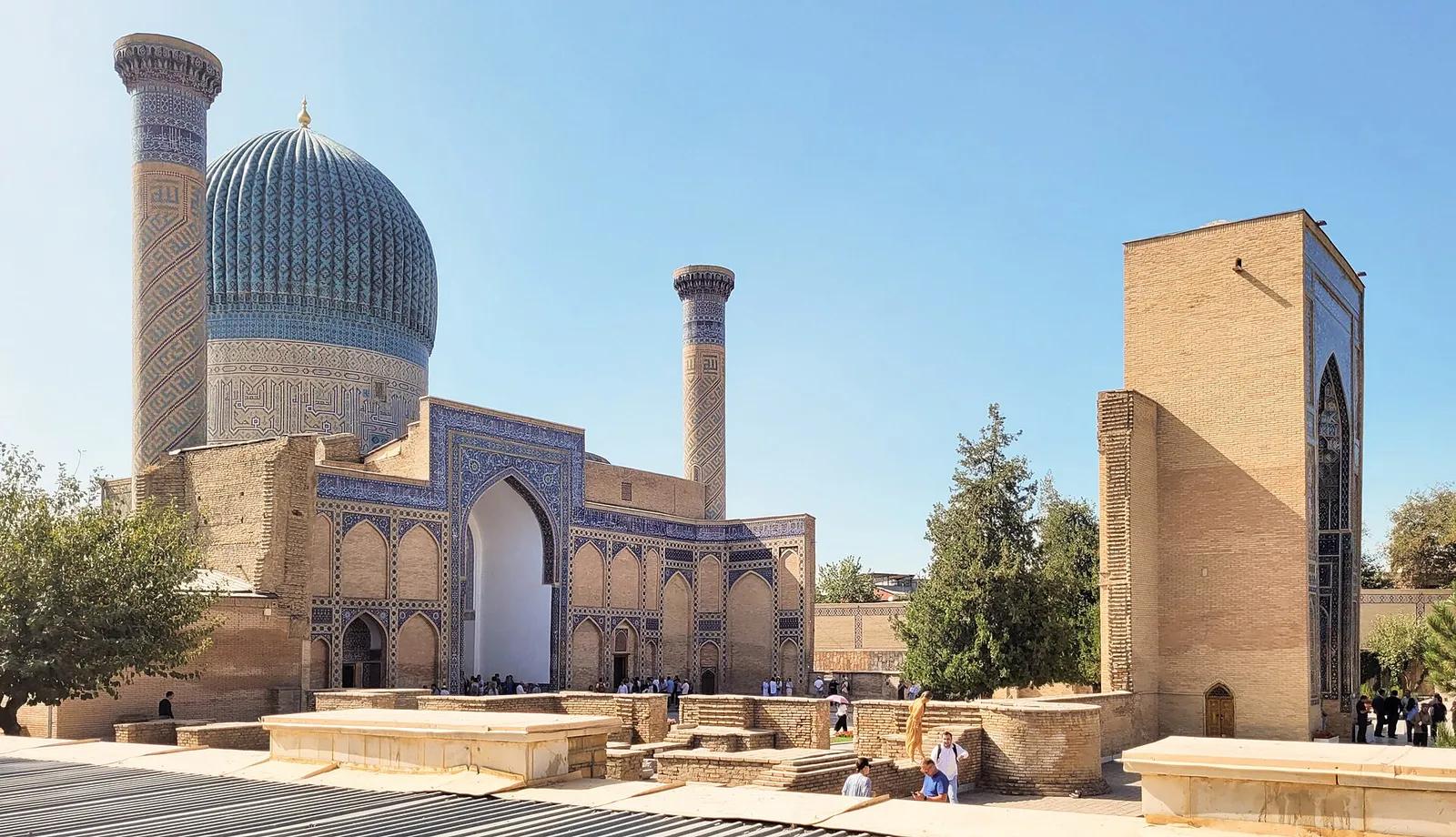
Gur-e-Amir. Known as Timur's mausoleum, it is also the resting place of Sayyid Baraka, a holy man from Termez who was Timur's spiritual adviser. Timur was buried in the same mausoleum, facing him, and Sayyid Baraka's grave is a reason to visit in its own right.
Khoja Ahrar complex. A mosque and madrasa beside the grave of Khoja Ahrar, the fifteenth-century Naqshbandi master who was also a leading statesman of Samarkand. The complex was completed in 1635–1636.
Mausoleum of Imam al-Maturidi. Abu Mansur al-Maturidi, who died in 944 and lies in the Chokardiza cemetery, is the theologian who gave his name to the Maturidi school of Sunni creed. The mausoleum is open again after restoration.
Day 2: around the Afrasiab hill
The second day stays in the north of the old city, around Afrasiab, the site of ancient Samarkand.
Hazrat Khizr Mosque. It stands on a hill opposite the Shah-i-Zinda complex, near the site of the southern gate of Afrasiab. The present building dates from 1854. Islam Karimov, the first President of Uzbekistan, is buried in its grounds.
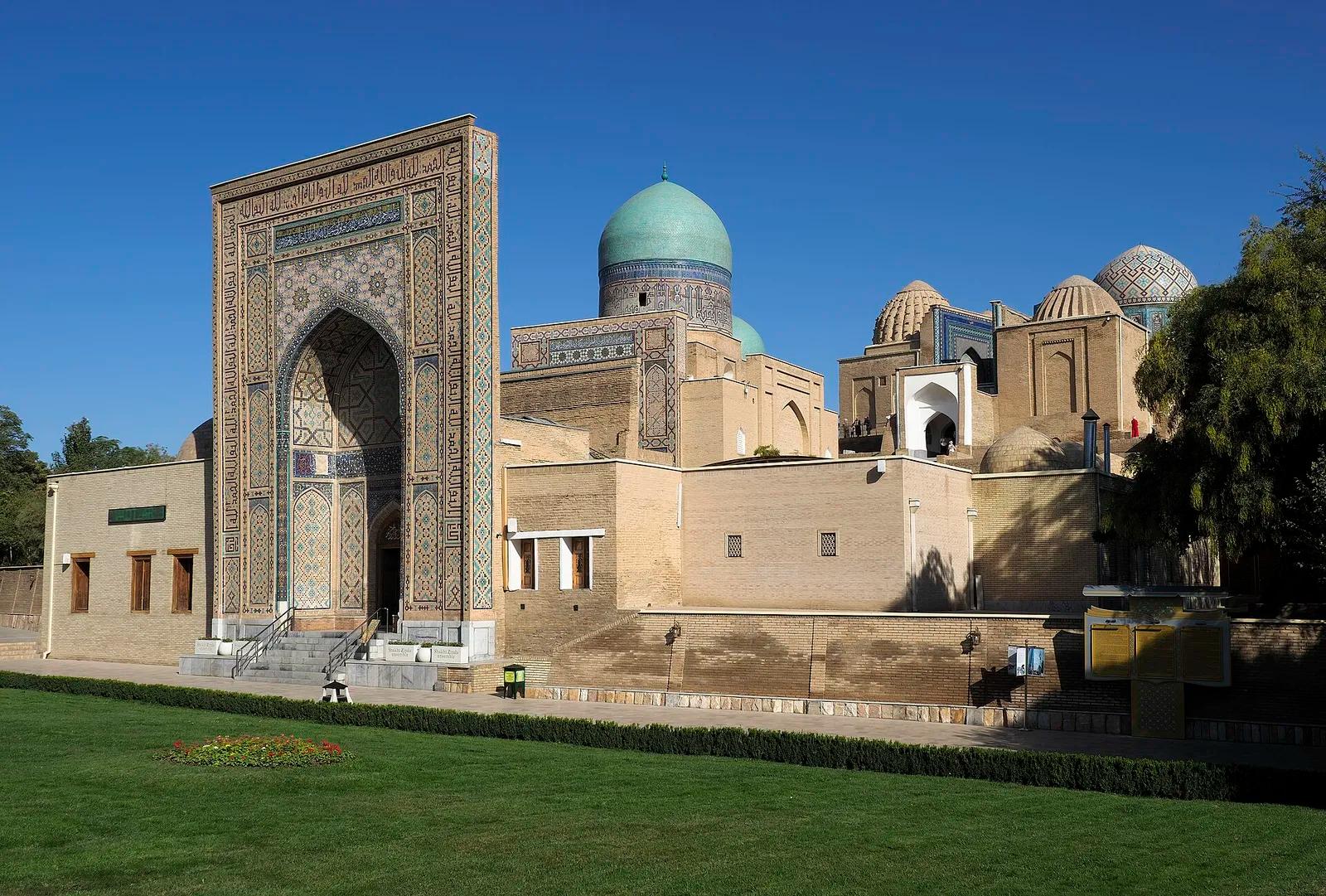
Shah-i-Zinda. This avenue of mausoleums grew up around the grave venerated as that of Qusam ibn Abbas, a cousin of the Prophet Muhammad (peace be upon him). Walk the avenue slowly and quietly; it is a cemetery as much as a monument.
Khoja Doniyor. This mausoleum is venerated as the tomb of the Prophet Daniel (peace be upon him) and is honoured by Muslims, Jews and Christians alike. Local legend says the tomb grows longer over time; you will hear the story there, and it is best taken as a legend. Visitors are asked to remove their shoes and to wear clothing that covers them.
Etiquette at the shrines
Most of this will be familiar from any mosque. The points below apply both at the complex and at the shrines in the city.
Dress. Wear clothing that covers arms and legs, whether you are a man or a woman. Women should carry a headscarf for the prayer halls.
Shoes. Expect to remove them in prayer halls and at some mausoleums, including Khoja Doniyor. Shoes that slip on and off easily save time.
Women. Where women may enter and pray can differ at smaller sites; follow the signs or ask the caretaker.
Prayer and conduct. If you wish to pray during your visits, do so at the sites that have a mosque. At mausoleums, many visitors make du'a quietly; keep your voice low, keep your phone silent near the tombs and do not block others.
Photos. Do not photograph people at prayer, and ask before photographing anyone up close.
Continuing across Uzbekistan
Two other cities are worth adding to a pilgrimage to Uzbekistan.
Bukhara. The birthplace of Imam al-Bukhari. It is also home to the shrine of Bahauddin Naqshband, who gave his name to the Naqshbandi order, the order to which both Mahdumi A'zam and Khoja Ahrar belonged. For the city itself, see our Bukhara guide.
Tashkent. Home to the new Centre for Islamic Civilisation, which opened in March 2026. Its Qur'an Hall holds the Uthman Mushaf, a manuscript traditionally linked to Caliph Uthman. For the rest of the city, see our Tashkent guide.
Going on your own or with a guide on the history of Islam
Every site on this route is open to independent visitors, and distances inside Samarkand are short. The complex at Khartang is different: arrange a car for the round trip before you go, because taxis are hard to find there and the way back is the difficult part. PilavTour sells transfers, and you can book one on its own, without a tour.
What a guide adds is context. At PilavTour we work with guides on the history of Islam. They can explain who each person buried here was, how Imam al-Bukhari, al-Maturidi and the Naqshbandi masters are connected, and which traditions about each site are history and which are legend. On our pilgrimage tours, prayer times are built into each day.
A guide adds to the cost of the trip. If you prefer to set your own pace, the route above works without one.
If a guided trip is what you want, ask us about a pilgrimage tour. Tell us your dates, where you are travelling from and how many days you have, and we will suggest a route and a place to stay.